By Jack Barber
As World Vegan Day approaches on 1 November, I’ve been reflecting on how different it feels now compared to the vegan boom in 2019.
This was a time of massive expansion to the range of vegan products in shops. It felt as though veganism was everywhere. Lots of people taking part in Veganuary, tonnes of options in supermarkets, vegan specials in restaurants and I remember having so many conversations with people who were either giving it a go or just changing their diet to be more plant-based.
It’s hard to track actual numbers of people who identify as vegan, so it’s hard to say if there was a sudden increase in the number of people who identify as vegan and whether that has declined recently, but it’s certainly felt different for a while now and I’d like to explore why that is.
Some might assume it’s because veganism was a trend or a fad. Some may even think we all died of protein deficiency.
Well, I believe neither is true.
My sense is that veganism levelled out, vegan options became more mainstream, and the public conversation moved elsewhere. But the reasons people embraced veganism have not gone away, they just feel less talked about. So maybe it’s time for us to start talking again?
The protein myth
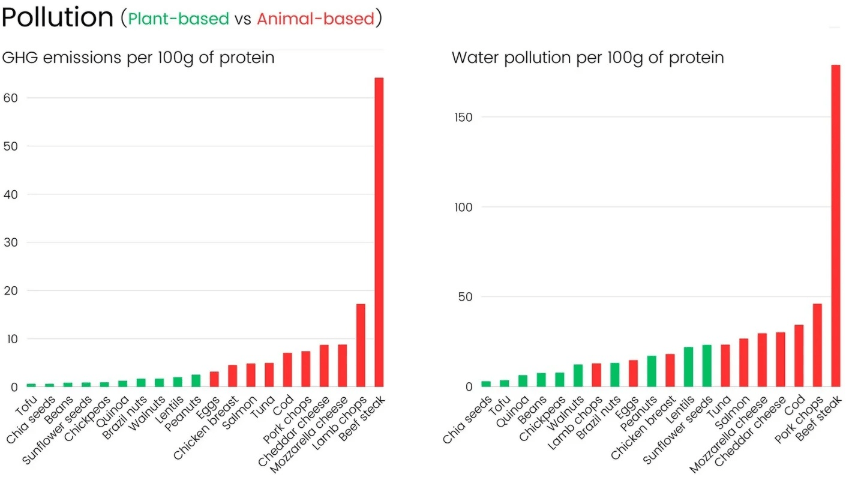
A recent study by Cambridge University comparing the nutritional value and environmental impacts of protein sources reported that several plant-based foods performed particularly strongly overall. Will this bring an end to the ‘where do you get your protein from’ question? I live in hope but unfortunately, it’s often social media influencers that seem to have more of a sway on protein intake than reliable studies.
Similarly, I’ve seen ‘manosphere’ influencers presenting meat eating as a test of masculinity, which is ironic given beef was the biggest loser from the Cambridge study. Beef contains less protein than lots of plant-based options and was the highest offender for emissions and water pollution. Nothing masculine about that.
Environment
This brings me on to animal agriculture, particularly factory farming, and the impact this is having on our environment.
There’s been a lot of headlines lately about water pollution in the UK and the state of our rivers. Recently Danny Dyer floated a giant poo emoji down the Thames to highlight this and called on government to nationalise the water industry.
That’s all good but when you follow the stream to the source of pollution animal agriculture is a major contributor, according to an Environment Agency report on agriculture and the water environment, and this doesn’t seem to be part of the story.
Specifically in Suffolk, we’ve seen concerns highlighted by local residents who opposed the Shadingfield chicken ‘mega-farm’ largely due to concerns around environmental impact, drawing on evidence from elsewhere in the country, such as the River Wye where poultry production has been linked to serious river pollution and ecological decline.
Resident reports around Cranswick Poultry near Eye shows the local effects of large-scale animal agriculture. This factory is one of the largest poultry factories in the UK, processing up to 1.4 million birds per week! Residents have reported intolerable smells and clouds of flies.
I could go on but the point is our environment is in trouble and there is one action we can all take to help through our dietary choices.
Vegan business struggles
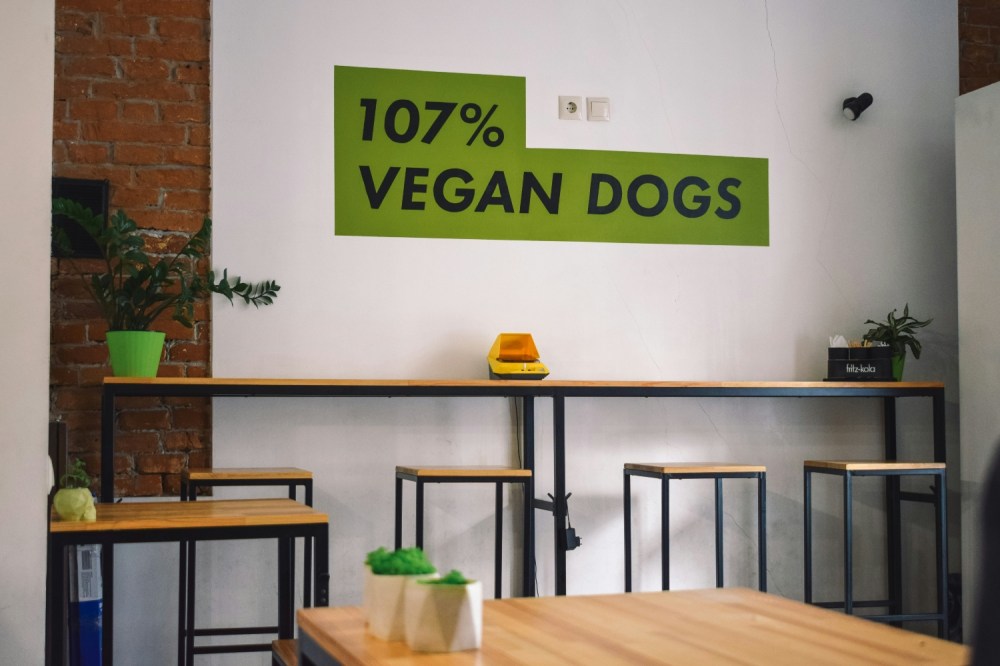
Here in Ipswich, I feel lucky to have Hanks, Harvest Moon and Chestnut and Rose all on my doorstep but nationally some specialist vegan businesses have struggled since that period of rapid expansion in 2019.
However, despite many headlines around vegan business closures, when you scratch beneath the surface often these closures are due to other factors which are affecting all businesses, such as cost-of-living pressures and rising business costs.
There is also an element of market correction. Many vegan food production companies, restaurants, shops and other businesses popped up in the boom, but it’s not realistic to expect all of those to succeed, especially with more mainstream options in chain restaurants and supermarkets.
The changing conversations
The changing vegan business market is only part of the story. What interests me more is how the conversation itself has changed. Perhaps it’s just my own experience but I’ve felt recently that people are feeling more liberated to be unkind. Mostly I’ve seen this directed at other humans, but it also extends to animals, often on a more subconscious level. I have less conversations with people wanting to reduce the animal products in their diet and I hear more people talking about their love for eating animals.
Why is this? People go vegan for a mixture of health, animal welfare and environmental impact and these are more prevalent issues now than ever:
- Health: One of the leading causes of death in the UK is heart disease and there are multiple studies showing how a plant-based diet can improve cardiovascular health (eg Plant Based Diet and Its Effect on Cardiovascular Disease 2023 and The Association of Plant-Based Diet With Cardiovascular Disease and Mortality 2021). Another leading cause of death is cancer and The World Health Organization (WHO)’s cancer agency classifies processed meat as Group 1 carcinogen. Where is the stop eating processed meat public health campaign?
- Animal welfare: Overwhelming evidence that animal abuse is prevalent in farms, even those supplying supposed premium brands and RSPCA ‘assured’ providers. Just take a look at Project Slingshot and the work they’re doing to expose this.
- Environmental impact: In case you haven’t noticed, it’s been a bit hot this year! Not to mention a few major weather incidents around the world. I could go on.
My conclusion around this is that we live in a world where the truth has to fight to be heard above all of the noise. Perception is reality and it seems a lot of people no longer perceive veganism to be the answer, despite overwhelming evidence it should be part of the answer to many problems we’re facing.
World Vegan Day and hope for the future
World Vegan Day takes place each year on 1 November and celebrates the impact veganism has on animals, people and environment.
For me, it also provides an opportunity to reflect. It can be easy to focus on what hasn’t changed quickly enough, whether that’s environmental challenges, animal welfare or dietary choices. Yet there has also been real progress.
Plant-based options are now available in places that barely catered for vegans a decade ago. More people understand the environmental impact of food choices. And there are thriving communities, including our own Vegan Network, continuing to have positive conversations about creating a kinder world across our Teams site and meet ups.
Recently I’ve seen courageous protestors demonstrating against animal testing up the road in Cambridgeshire, Danny Dyer and his Thames poo emoji and loads of other examples of kind humans trying to protect animals and their habitats.
In addition, the Cambridge protein study and others like the Lancet Healthy Longevity study 2025, reinforce plant-based as a health dietary choice.
All of this has motivated me to write this article and sparked up my passion for reducing all forms of animal abuse.
And to answer the question where all the vegans went, we didn’t go anywhere, we’re still here. Personally, I’ve felt a bit tired and weary over the past few years from the lack of progress in ending different forms of animal abuse, but I’m seeing some green shoots of a vegan comeback, and it motivates me to be more active and do more for the animals.
What next?
Progress isn’t always a straight line. Sometimes movements become quieter before they become stronger again.
Maybe you’ve been feeling weary too and had a quiet spell? Sometimes it’s good to have a bit of a break or a reset. Or maybe it’s time to dive back in and try to be the change. Maybe start again with one useful conversation, one compassionate choice or one local action.
How do you feel about veganism in 2026 and what are you going to do next?
Author’s note:
These are my own personal reflections on the current state of veganism and not the views of the entire Vegan Network or Suffolk County Council.
Featured image by Arseny Togulev


